Effective lift management is massively important for resident safety, legal compliance, and operational efficiency. Many lifts in UK blocks of flats are older, meaning they may pre-date current safety standards.
Lifts are a necessity in modern high-rise residential buildings, and with over 50,000 operational lifts in UK housing, maintaining their safety and reliability is paramount for block managers. This comprehensive guide will equip you with the essential knowledge to navigate the complexities of lift inspections, maintenance, and compliance, ensuring peace of mind for both you and your residents.

Minimise costly breakdowns
Routine servicing is the best form of preventative maintenance. By proactively checking hydraulic fluid levels, addressing motor wear, and ensuring door mechanisms are functioning correctly, you minimise unexpected downtime, extend the lift’s lifespan, and avoid expensive emergency repairs.
Ensuring safety and compliance
In the UK, people-carrier lifts must be inspected every six months to meet legal requirements. Well-maintained lifts are safer, which enhances the reputation of your residential complex and provides assurance to residents.
Aidenn Compliance
Save time, increase efficiency, and meet your fire safety requirements with Aidenn Compliance, the essential tool for block managers needing to action remedial tasks.
Aidenn Compliance's intelligent document-reading capabilities can process simple and highly-complex compliance documents in the background while you work, saving hours or even days of human time and helping you meet compliance requirements. One of these documents is a LOLER inspection.
Lift inspection checklist
The Lifting Operations and Lifting Equipment Regulations 1998 (LOLER) mandate thorough examinations of lifting equipment (such as passenger lifts) to ensure safety and compliance. This summary outlines the three main areas covered during a formal LOLER inspection.

1. Examination of the lifting equipment (physical condition)
The inspector verifies the physical integrity and function of all components. These include:
Mechanical integrity
- Checking for signs of excessive wear and tear, damage, deformation, or corrosion on the lift car, frame, ropes, and chains.
Critical safety features
- Verifying that limit switches (travel and final limits) are correctly set and fully operational.
- Confirming that emergency stop buttons are clearly marked and fully functional.
System functionality
- Inspecting the braking system for correct operation and wear.
- Ensuring door mechanisms operate smoothly and that interlocks engage correctly before movement.
- Checking the leveling accuracy between the lift car and the floor plates to prevent tripping hazards.
- Assessing the hydraulic or motor system for leaks, overheating, or excessive noise.
Verifying that all warning lights and control panel indicators are working.
2. Examination of the lifting operation (usage and control)
The inspector ensures the lift is used safely and correctly.
Load limits
- Confirming the lift is operated within its clearly marked Safe Working Limit (SWL) and passenger capacity.
Controlled movement
- Observing the lift to ensure it operates in a safe, controlled, and consistent manner.
Intended use
- Verifying the equipment is only used for its intended purpose (e.g., a passenger lift is not used for excessively heavy goods).
Operator competence (if applicable)
- Ensuring any personnel involved in maintenance or rescue are properly trained and competent.
3. Documentation and maintenance
The inspector reviews administrative compliance and care:
Inspection records
- Confirming the Report of Thorough Examination (LOLER Report) is available and dated within the last six months.
Maintenance history
- Verifying that all service and maintenance records are complete, up-to-date, and demonstrate a regular servicing schedule.
Defect rectification
- Checking that all defects identified in previous reports have been fully addressed and rectified.
Statutory compliance
- Ensuring other relevant certificates, such as fire safety or insurance, are present and current.
Storage environment
- Ensuring the machine room (or equipment area) is secure, clean, correctly lit, and free from obstructions.
Legal requirements and safety standards
Lift owners must adhere to regulations to safeguard residents and avoid severe penalties:
The Lifting Operations and Lifting Equipment Regulations 1998 (LOLER) mandate regular, thorough examinations by a competent person (typically an insurance inspection) every six months for passenger lifts. The Provision and Use of Work Equipment Regulations 1998 (PUWER) also apply.
New passenger lifts must comply with British Standard EN81-73 for fire safety, which is vital for managing evacuations.
Incidents, including fatal accidents, have resulted in hefty fines for property management companies, so up-to-date compliance certificates are essential for legal and safety assurance.
How lift age impacts servicing
The age of a lift is a significant factor in its maintenance needs. Lifts installed before current regulations require more frequent and detailed inspections to ensure they meet modern safety standards.
A professional lift maintenance contract ensures that all inspections, repairs, and necessary upgrades are handled expertly, which takes care of risks associated with aging equipment and enhances overall safety.
Types of lifts and their specific needs
Understanding the different types of lifts is vital for tailoring maintenance plans.
These are the primary means of vertical transport for everyday use. Routine inspections have to be done to prevent breakdowns and ensure compliance with building regulations.
These are required in buildings over 18 meters above or 10 meters below fire service vehicle access. These lifts are essential components of fire safety strategy. They have higher safety standards, ensuring they can operate effectively to assist fire and rescue services during emergencies.
While passenger lifts are generally not used during an emergency, fire-fighting lifts, and sometimes dedicated evacuation lifts, are incredibly important. They are often used for evacuating disabled persons.
The building owner or duty holder is responsible for ensuring regular inspections and maintenance for all lift types.
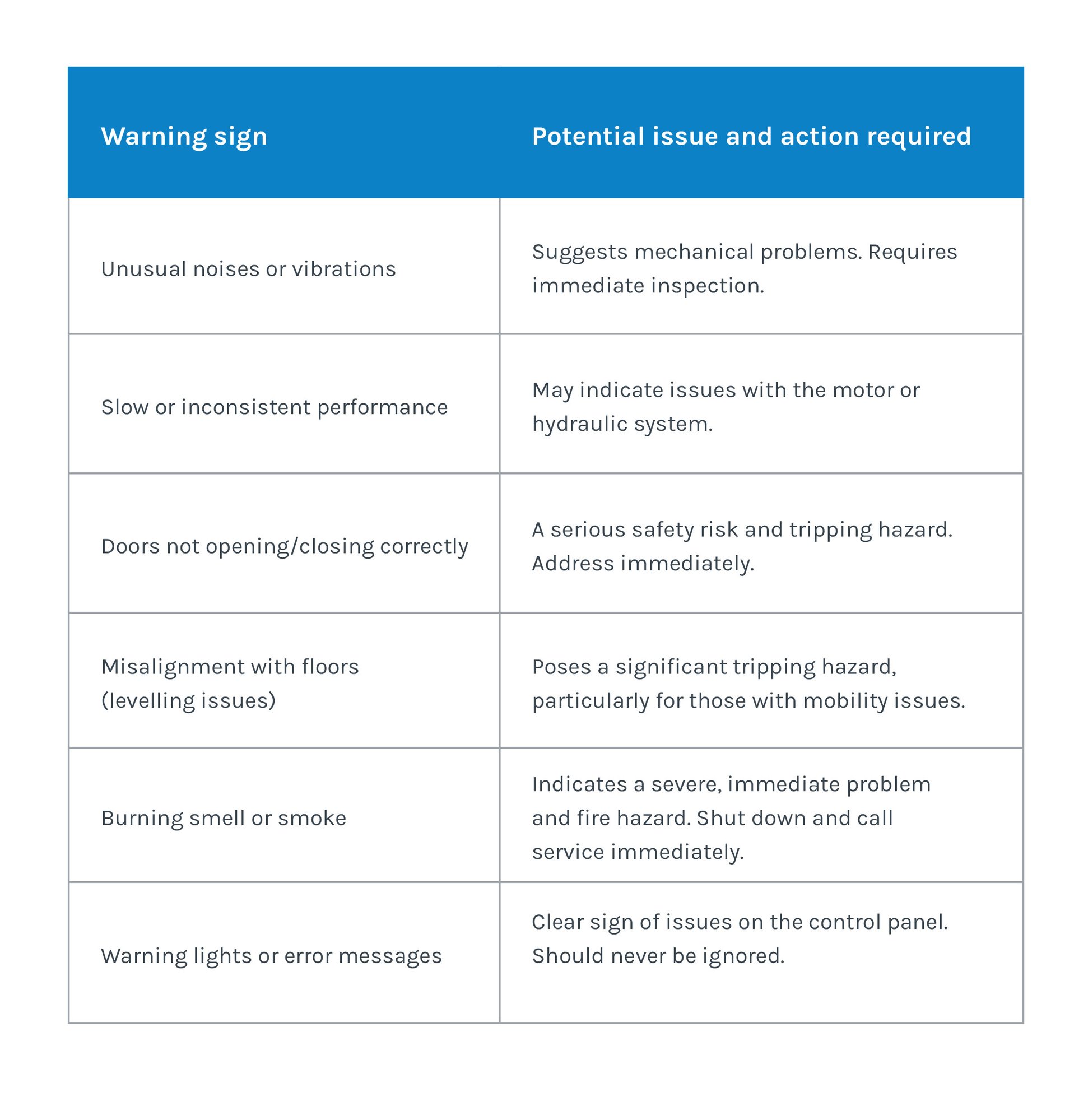
Warning signs for immediate lift attention
Identifying the common warning signs of a potential malfunction is crucial for preventing emergencies and costly emergency repairs.

Avoiding emergency repairs
A proactive lift inspection schedule is the best defence against emergency repairs. Scheduled lift performance testing and annual inspections help identify worn components and potential hazards before they escalate into serious, dangerous, and expensive malfunctions.
Upgrading your lift: When and why
Lifts over 10 years old may no longer meet contemporary safety and efficiency standards, making an upgrade advisable. Upgrading is necessary when a lift nears the end of its lifecycle or fails to comply with modern requirements.
Lift modernisation options
Modernisation can range from partial refurbishments to full replacements. Options typically involve replacing outdated components with state-of-the-art equivalents:
- Key components: Upgrades often include the electrics, hoist/motor, control panel, car doors, and communication systems.
- Benefits: Modernisation can significantly reduce energy costs through technologies like regenerative drives, improve safety and performance, and often takes less time than a full installation, minimising disruption to residents.
When choosing a new model, consider the lift’s capacity to handle resident traffic, enhanced safety systems, and energy-efficient components.
Keeping your lifts smooth and safe
For block managers, ensuring the safe and smooth operation of lifts requires a balanced approach focused on:
Implement a comprehensive lift servicing plan for your blocks. Routine inspections should be tailored to the lift's usage. More frequent checks (potentially monthly) may be necessary in some settings.
Maintain strict adherence to UK regulations, especially LOLER (six-monthly inspections) and fire safety standards.
Only engage with certified professionals who are knowledgeable about UK regulations to service all critical components, from the machine room and shaft to the control panel and guide rails.
Final thoughts
For block managers, the responsibility of maintaining lifts is a continuous duty that directly impacts resident safety, operational efficiency, and legal compliance. Ultimately, investing in a robust lift maintenance regime is an investment in the smooth, uninterrupted daily lives of your occupants and the long-term reputation and value of your residential blocks.
Keep reading...
Read more on
#{ item.name }
|
No posts available
Be the first to hear about new content for Property Managers.
eBooks and webinars, always free
- Data-driven industry insights
- Compliance and legal updates
- Property management best practices